
Knowledge Base
The knowledge base provides reference material that AI agents query during assessments. It gives agents domain-specific context that improves testing decisions.
What Goes in the Knowledge Base
Knowledge base entries are markdown notes containing information relevant to your assessments:
- Application architecture and technology stack details
- Known authentication flows and session management patterns
- Business logic descriptions and critical workflows
- Previously discovered vulnerability patterns
- Environment-specific configuration details
- Testing methodology notes and custom techniques
Managing Entries
From the Knowledge Base panel:
- Add new entries with a title and markdown content
- Edit existing entries to keep information current
- Delete entries that are no longer relevant
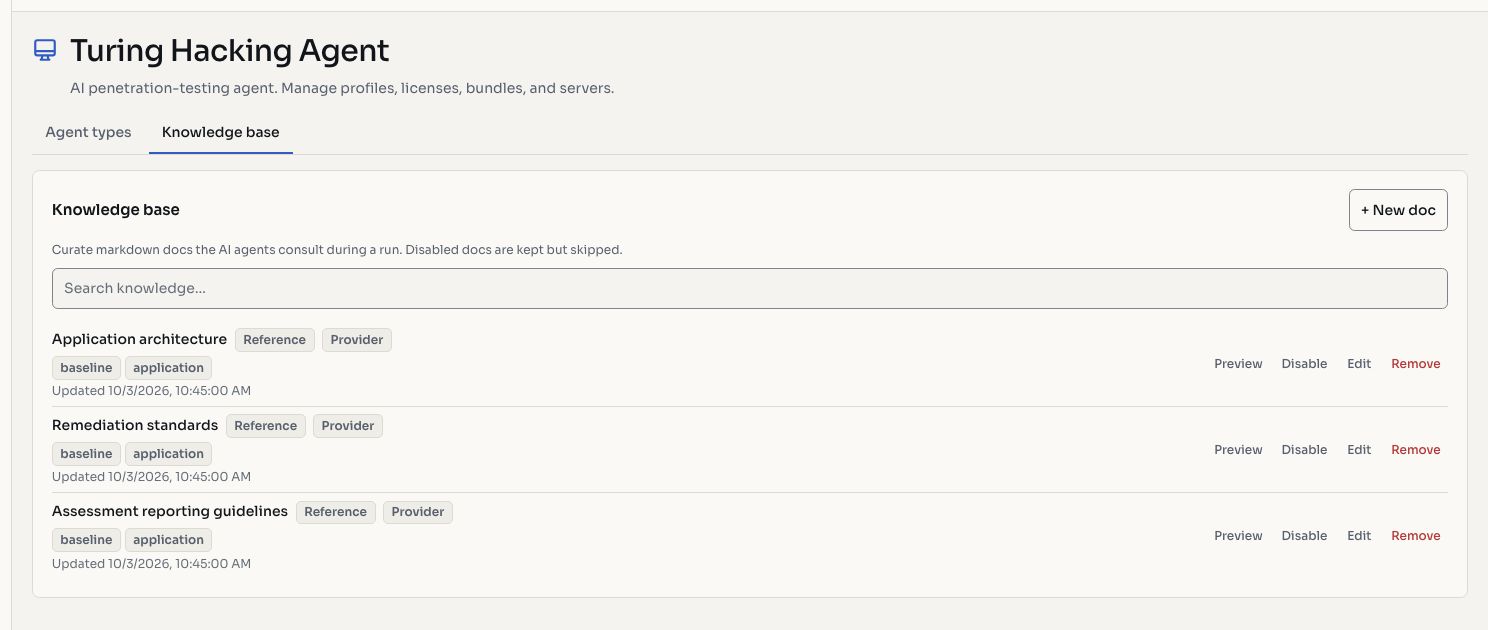
Screenshots use fictional demonstration data.
How Agents Use the Knowledge Base
During an assessment, the agent searches and retrieves relevant entries to:
- Understand the target application's architecture before testing
- Apply domain-specific testing techniques
- Avoid repeating tests documented as dead-ends
- Focus on areas known to be high-risk
The strategist model also draws from the knowledge base when recommending next steps.
Coverage Templates
Knowledge base documents can be linked to coverage templates: keyword-triggered test class assignments. When the agent encounters certain technologies in the target, coverage templates point it to the relevant KB entries and testing procedures.
This creates a feedback loop: as your team documents findings and testing approaches, future AI assessments become more targeted.
TIP
Treat the knowledge base as a living document. Update it after each assessment with lessons learned, new attack patterns, and application changes.